Take a "fly" to the airport, take an "air taxi" across the Yangtze River, drink a cup of coffee delivered by a drone by the Great Wall... the low-altitude economy continues to be "updated" and gradually enters people's lives.
In 2024, "low-altitude economy" was written into the government work report, highlighting its important position in the country's economic development. Over the past year, the policy and industry sides have resonated at the same frequency, and many places across the country have taken active actions to develop the new track of low-altitude economy.
Some institutions predict that the overall market size of my country's low-altitude economy will reach 859.17 billion yuan in 2025. There are unlimited opportunities below a thousand meters.
Low-altitude "takeoff", cities race to meet the "wind".
On January 27, Ms. Wu from Anhui took her children to the Xingye Helicopter Flight Base in Pudong, Shanghai, and took a helicopter to take in the gorgeous fireworks of Shanghai Disneyland. The cool experience made Ms. Wu exclaim: "It's so exciting, I've never had such a perspective!" This is a microcosm of the hot development of the low-altitude economy.
Since last year, the "low-altitude economy" has quickly entered the public's field of vision. From the central government to local governments, supporting policies have been intensively introduced: the Third Plenary Session of the 20th CPC Central Committee put forward clear requirements for the development of the low-altitude economy; the Ministry of Industry and Information Technology and other four departments issued the "Implementation Plan for the Innovation and Application of General Aviation Equipment (2024-2030)" to build a modern general aviation advanced manufacturing industry cluster; the Civil Aviation Administration of China, the National Development and Reform Commission and other departments have launched relevant measures in the fields of airport construction, urban digitalization, etc.

Many places are competing to make plans and speed up the exploration of the "boundaries" of the sky: Not long ago, at the foot of Changbai Mountain in Jilin Province, the Sky City Flight Base welcomed the first batch of tourists. Lian Ning, chairman of the Sky City Flight Experience Company of Changbai Mountain Protection and Development Zone, said that three special flight routes have been launched to provide tourists with a unique travel experience.
The various data of the "Zhongyi Lingyun" low-altitude operation platform are refreshed in real time, and the navigation status of low-altitude flying objects in Wuhan, Shiyan and other places is clear at a glance, accelerating the construction of a low-altitude intelligent "information network" to allow Hubei's low-altitude industry to "build momentum for flight".
From the first test flight of Zhejiang's normalized low-altitude manned route to Hainan's first drone delivery of duty-free goods off the island, the dream of "Sky City" has been getting closer over the past year.
According to incomplete statistics, since last year, about 30 provinces have included the development of low-altitude economy in the local government work report or issued relevant policies. At the local two sessions not long ago, "low-altitude economy" once again became a high-frequency word, and the path of "demanding productivity from the sky" became clearer.
On February 27, 2024, Fengfei Aviation's 2-ton eVTOL completed its first cross-city and cross-sea demonstration flight. At present, the company's independently developed 2-ton cargo aircraft has been awarded a type certificate and a production license. Zhong Ruihua, brand director of Fengfei Aviation, was very emotional: "The support from government departments, partners, etc. has greatly boosted the confidence in the development of the industry."
"Over the past year, the most obvious feeling is that the cognition has been clarified and the industry has become more rational." Zhang Xuejun, deputy director of the National Key Laboratory of Air-Ground Integrated New Navigation System Technology, said that the top-level design of the low-altitude economy has been continuously improved, and the technical route and business model have been further sorted out and demonstrated, and a new industrial ecology has gradually taken shape.
Technology is "new", and industrial development is going deeper and more practical.
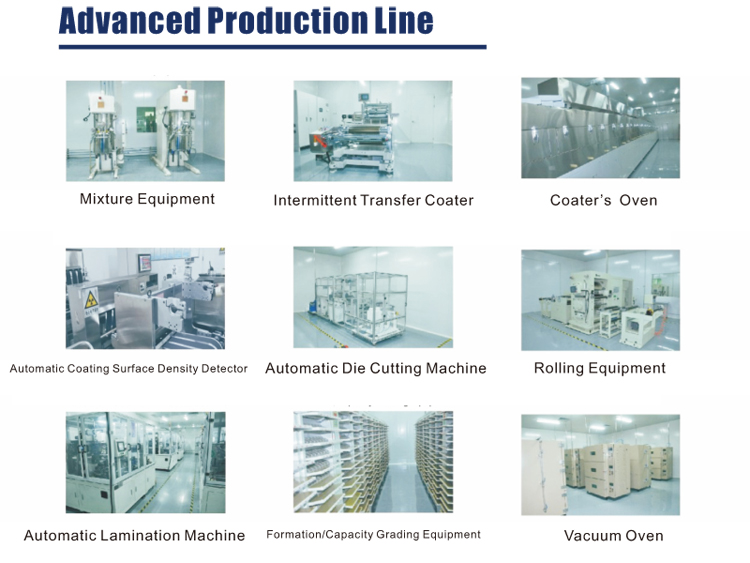
Just after the Spring Festival holiday, the pilot production line for graphene aviation battery research and development has started at the Beijing Institute of Aeronautical Materials of China Aviation Engine Group. The graphene aviation batteries manufactured here will be used in hybrid drones, and the energy density can be increased by more than 50% compared with traditional batteries.
On the vent, resource elements are further gathered in the low-altitude economic field, and innovation is blooming in many places.Batteries are the key to long-distance, safe and stable flight of low-altitude aircraft.
"We have solved the key difficulties of airship electrification technology such as electronic control, motor and control, laying the foundation for the application of new energy technologies such as high-energy density batteries and fuel cells in airships, and developing towards a more environmentally friendly, comfortable and easy-to-control development." Zhou Lei, chief designer of the "Xiangyun" AS700 manned airship, said.
Ehang Intelligent completed the eVTOL solid-state battery flight test; CATL strategically invested in Fengfei Aviation to improve battery performance through cooperation... Towards long-range and lightweight directions, battery research and development has accelerated.
Aircraft, the "hub" of the entire low-altitude industry chain.
Beijing Yanqing in early spring. At the drone test site, Li Jingyang, chairman of Beijing Qinghang Zijing Equipment Technology Co., Ltd., is signaling the pilot to control the unmanned helicopter.
Qinghang Equipment innovatively proposed the cross-twin rotor direction, and launched the JZ-1200 cross-twin rotor unmanned helicopter at the Zhuhai Air Show last year, increasing the effective load to 600 kg. Li Jingyang said that the company is focusing on the direction of intelligent unmanned operation and continuously improving product performance.
From the launch of the AE200 pure electric manned eVTOL by Wofei Changkong to the RX4E Ruixiang four-seater electric aircraft independently developed by the Liaoning General Aviation Research Institute of Shenyang Aerospace University being awarded a type certificate, the "new" technology and products over the past year have allowed people to see the broad prospects for industrial development.

From advanced flight control systems, high-precision sensors, to carbon fiber composite materials, the upstream and downstream of the industrial chain work together. my country is accelerating the promotion of 5G-A technology verification and application pilots, exploring the establishment of low-altitude economic network facilities with integrated interoception, and constantly consolidating the digital "foundation".
"We recently conducted a survey. Whether it is eVTOL or drones, the overlap with the new energy vehicle industry chain has reached 75%. The low-altitude economy is not only a new track, but also plays a role in extending the chain for many industries." Zhang Xuejun said.
"Major information and communication companies in my country, as well as power batteries, motors and other companies have participated in the development of the low-altitude economy." Tao Qing, director of the Operation Monitoring and Coordination Bureau of the Ministry of Industry and Information Technology, said that the low-altitude economy has effectively combined with advantageous industries, forged long boards, and expanded growth poles.
Trillion-dollar industry, how to fly "stable" and "well"
Industry insiders believe that my country's low-altitude economy is still in its infancy, and there is still a long way to go to "fly" into the future.
It is important to do a good job in application traction. Currently, 15 cities including Beijing, Shanghai, and Changzhou have announced to jointly build a low-altitude economic ecosystem, and plan to create 100 demonstration projects by 2025. From agricultural and forestry plant protection, power inspection, to logistics distribution, and aerial tours, the exploration of application scenarios has accelerated.

Zhang Xuejun believes that, from the current perspective, it is low-altitude logistics that can quickly achieve large-scale commercial operations, and policy support and infrastructure construction are critical to the support of the scene. He suggested that local governments should promote the implementation of characteristic applications according to their own advantages and local conditions, and accelerate the deepening and expansion of scenes on the basis of pilot projects.
Key technologies, product performance, and supporting facilities also determine the development of the industry. Industry insiders believe that there are shortcomings in the key links of the low-altitude economy. For example, technologies such as high-performance lightweight materials and precise sensing have yet to be broken through, and some key components such as flight control rely on imports. Unlike new energy vehicles, it is difficult for aircraft to increase their endurance in the air by simply adding batteries, and it is urgent to break through new battery technologies. In addition, more compound talents who understand technology and management should be cultivated to better serve the development of the industry.
Safety is the most important foundation for the development of the low-altitude economy, and safety requires the escort of policies, regulations and standards systems. Wang Shuwu, president of the Jilin Province UAV Industry Association, suggested strengthening top-level design, policy and regulatory construction, and standard guidance to form an overall plan from low-altitude equipment manufacturing, infrastructure construction and guarantee, to low-altitude operation services, airspace management, etc. "Cultivating new industries is a long-distance race." Zhang Xuejun said that in this process, not only capital and government departments need to be patient, but also more time should be given to the industry and scientific researchers to deepen technology, strengthen the industrial chain, improve the system, and move forward steadily.